
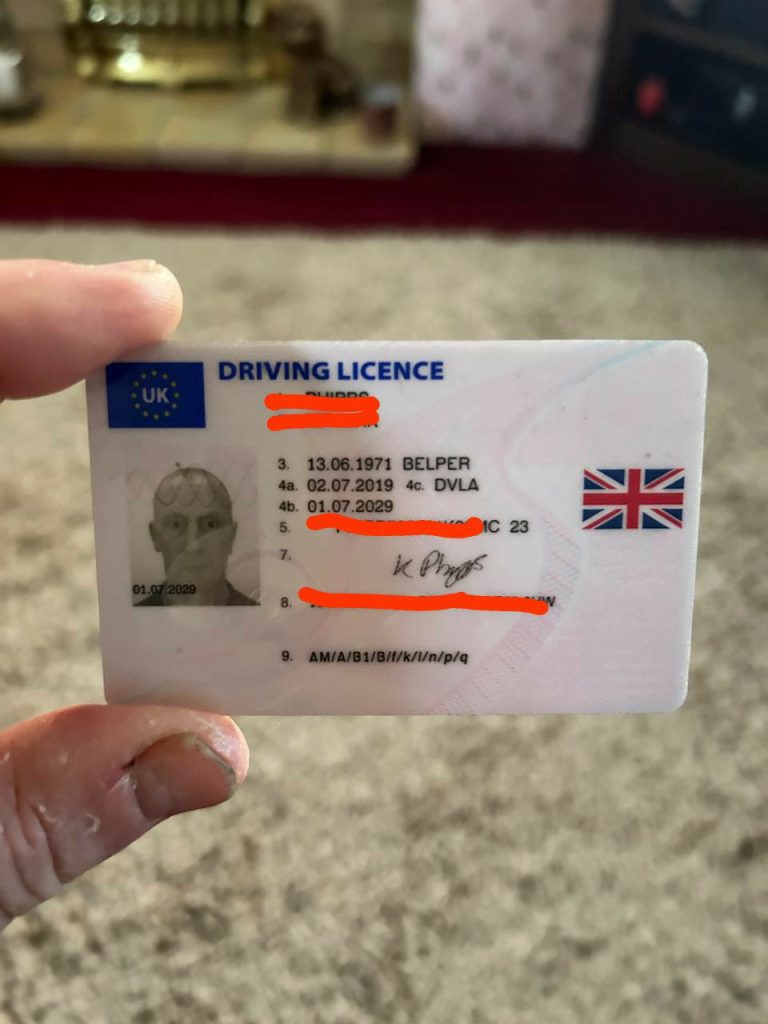
Navigating the Path to Your Official UK Driver’s License: Why Official Channels Are the Only Way
In today’s digital age, the internet offers solutions for almost everything. It’s understandable that you might be searching for the quickest way to obtain a UK driver’s license, perhaps even wondering if you can “buy a UK driver’s license online” with ease. However, it’s crucial to understand that while the online world offers convenience for many legitimate services, obtaining a driver’s license is not one of them in the way you might be imagining.
This blog post aims to provide you with comprehensive, accurate information on how to legally and safely acquire a UK driving license. We will explain why unofficial “online” vendors are a dangerous trap and guide you through the official process, ensuring you receive a legitimate license that stands up to scrutiny and keeps you safe on the roads.
The Peril of Unofficial “Online Driver’s Licenses”
Let’s address the elephant in the room directly: you cannot legally or legitimately buy a UK driver’s license online from any source other than the official Driver and Vehicle Licensing Agency (DVLA). Any website or individual claiming to sell you a “real” UK driver’s license without you going through the official theory and practical tests is engaged in fraudulent activity.
Falling for such scams carries severe risks and consequences:
- It’s Illegal: Buying or possessing a fake driver’s license is a criminal offence. If caught, you could face significant fines, imprisonment, and a criminal record.
- Identity Theft and Financial Fraud: Scammers often demand personal information and payment upfront. You risk having your identity stolen, your bank account compromised, and losing your money entirely without ever receiving anything, or receiving a worthless piece of plastic.
- Invalid Insurance: Driving with a fake license means your insurance policy will be invalid. In the event of an accident, you would be personally liable for all damages and injuries, which could amount to hundreds of thousands of pounds.
- Road Safety Hazard: A driver’s license is not just a piece of paper; it’s proof that you have demonstrated the necessary knowledge and skills to drive safely. Driving without proper training and testing puts yourself, your passengers, and other road users at extreme risk.
- Zero Validity: Any document you receive from an unofficial source will be a worthless counterfeit. It will not be registered with the DVLA, meaning it cannot be used for official identification, insurance, or legal driving purposes.
In summary, attempting to buy a UK driver’s license online from unofficial vendors is a dangerous, illegal, and ultimately futile endeavour that will cost you money, peace of mind, and could lead to severe legal repercussions.
Your Official Journey to a Legitimate UK Driver’s License
The only way to obtain a valid UK driver’s license is through the official process managed by the DVLA (Driver and Vehicle Licensing Agency) and the DVSA (Driver and Vehicle Standards Agency). While it requires time and effort, it’s a structured path designed to ensure you become a competent and safe driver.
Here’s a breakdown of the official steps you’ll need to follow:
Step 1: Apply for a Provisional Driving License
Before you can even begin learning to drive on public roads, you need a provisional driving license. This allows you to drive a car under supervision and take your theory and practical tests.
Eligibility Criteria:
- You must be at least 15 years and 9 months old to apply (though you can only start driving a car when you’re 17, or 16 if you receive the higher rate of the mobility component of Personal Independence Payment).
- You must be able to read a new style number plate from 20 metres away.
- You must be a resident of Great Britain.
How to Apply:
You can apply for your provisional license online via the official GOV.UK website, or by post using a D1 form available from Post Offices.
Table 1: Key Requirements for Provisional Driving License Application
| Requirement | Details |
|---|---|
| Age | At least 15 years and 9 months old (can drive a car at 17, or 16 with higher rate mobility PIP) |
| Residency | Must be a resident of Great Britain (different rules for Northern Ireland) |
| Eyesight | Able to read a new style number plate from 20 metres (approx. 65 feet) or an old style number plate from 20.5 metres (approx. 67 feet). You will be asked if you need glasses/contact lenses for driving. |
| Identity Verification | You’ll need to provide identity documents (e.g., valid UK passport, birth certificate, biometric residence permit) and addresses for the last 3 years. |
| National Insurance No. | You will need your National Insurance number if you have one. |
| Payment | Current fee for a provisional driving license application (check GOV.UK for the latest fee). |
| Photographs | For online applications, the DVLA will usually use your passport photo if you have a valid UK passport. For postal applications, you’ll need to provide a passport-style photo. |
Once you receive your provisional license, you can start learning to drive!
Step 2: Learning to Drive and Passing Your Theory Test
With your provisional license in hand, you can begin your driving lessons. You must be supervised by someone who is at least 21 years old and has held a full driving license for at least 3 years.
- Professional Driving Lessons: It’s highly recommended to take lessons with an Approved Driving Instructor (ADI). They are qualified to teach you the skills needed to pass your test and drive safely.
- Private Practice: You can also practice in a private car, but it must be insured for you as a learner driver, and display ‘L’ plates (or ‘D’ plates in Wales) on the front and back.
Alongside practical lessons, you must pass the driving theory test. This test assesses your knowledge of the Highway Code and hazard perception.
The Theory Test consists of two parts:
- Multiple-choice questions: 50 questions based on the Highway Code, road signs, and general driving knowledge. You need to answer at least 43 correctly.
- Hazard perception test: 14 video clips, each featuring one or more developing hazards. You need to identify these hazards as early as possible. You score points based on how quickly you spot the hazards.
You can book your theory test online via the official GOV.UK website. There are many resources available to help you prepare, including official practice apps and books.
Step 3: Passing Your Practical Driving Test
Once you and your driving instructor feel you are ready, you can book your practical driving test. You must have passed your theory test before you can book the practical test.
What to Expect During the Practical Test:
- Eyesight Check: You’ll be asked to read a number plate from a distance.
- ‘Show Me, Tell Me’ Questions: You’ll be asked two questions about vehicle safety checks – one ‘show me’ (you demonstrate) and one ‘tell me’ (you explain).
- General Driving Ability: This is the main part of the test, where you’ll drive on various roads and in different traffic conditions. The examiner will assess your observation, judgment, control, and ability to follow traffic rules.
- Reversing Manoeuvre: You’ll be asked to perform one of four reversing manoeuvres (e.g., parallel parking, bay parking, pulling up on the right).
- Independent Driving: You’ll be asked to drive for about 20 minutes following either sat nav directions or traffic signs.
Table 2: Breakdown of Official UK Driving Tests
| Test Type | Objective | Requirements to Book | Scoring/Pass Mark |
|---|---|---|---|
| Theory Test | Assesses knowledge of the Highway Code, road signs, and hazard perception. | Valid provisional driving license. | Multiple Choice: 43 out of 50 correct answers. Hazard Perception: 44 out of 75 points. Both parts must be passed in the same sitting. |
| Practical Test | Assesses your ability to drive safely and competently on various roads, performing specific manoeuvres. | Passed theory test, valid provisional driving license, suitable car (roadworthy, insured, L-plates, extra mirror for examiner), driving supervision for lessons. | You’re allowed up to 15 minor driving faults. More than 15, or one serious/dangerous fault, will result in a fail. |
Step 4: Obtaining Your Full Driving License
Congratulations! Once you’ve successfully passed your practical driving test, the examiner will usually take your provisional license from you and send it off to the DVLA. Your full UK driving license will then be posted to you automatically.
Important Notes for New Drivers:
- Probationary Period: For the first two years after passing your test, you are on a probationary period. If you accumulate 6 or more penalty points during this time, your license will be revoked, and you’ll have to retake both your theory and practical tests.
- Driving Abroad: Your UK driving license is valid in EU countries and many other countries worldwide. For some countries, you may need an International Driving Permit (IDP) in addition to your UK license.
Frequently Asked Questions (FAQ)
Here are answers to some common questions you might have about obtaining a UK driver’s license:
Q1: Can I really buy a UK driving license online easily? A1: Absolutely NOT. Any claims to sell you a UK driving license online without you taking the official theory and practical tests are fraudulent. It’s illegal, dangerous, and will lead to severe penalties if discovered. Always go through the official DVLA and DVSA channels.
Q2: How long does the official process to get a UK driving license take? A2: The duration varies greatly depending on individual learning speed, how often you take lessons, and test availability. It can range from a few months to over a year. There’s no fixed timeframe, but rushing the process can hinder your learning.
Q3: What are the costs involved in getting a UK driving license officially? A3: The main costs include:
- Provisional driving license application fee.
- Driving lessons (variable, but can be a significant cost).
- Theory test fee.
- Practical driving test fee.
- Potentially, fees for practice materials or apps. Check the official GOV.UK website for the latest fees, as they can change.
Q4: What if I already have a foreign driving license? Can I exchange it? A4: It depends on where your license was issued.
- EU/EEA Licenses: You can generally drive on your existing license until you are 70 (or for 3 years if you moved to Great Britain after 67), after which you’ll need to exchange it for a UK license.
- Designated Countries (e.g., Australia, Canada, New Zealand, South Africa, USA): You can drive on your foreign license for up to 12 months, then you must get a UK provisional license and pass the practical test within 5 years to get a full UK license.
- Other Countries: You can drive for up to 12 months, then you must apply for a provisional license and pass both the theory and practical tests. Always check the official DVLA guidance for specific rules related to your country of origin.
Q5: What are the penalties for driving without a valid, legitimate license in the UK? A5: Driving without a valid, legitimate license is a serious offence. Penalties can include:
- A fine of up to £1,000.
- 3-6 penalty points on your license (if you manage to get one later).
- Disqualification from driving.
- Potential vehicle seizure.
- Invalid insurance, leading to further penalties if involved in an accident.
Conclusion: Choose the Right Path
While the idea of buying a UK driver’s license online might seem appealing for its perceived speed and convenience, the reality is far from it. It’s a path fraught with legal dangers, financial risks, and a complete lack of validity.
Your safety, the safety of others, and your legal standing on UK roads depend entirely on obtaining a genuine license through the official channels. Embrace the learning process, pass your tests, and earn your full UK driving license the right way. It’s a rewarding journey that equips you with essential life skills and provides you with a universally recognized, legal document that you can be proud of. There are no shortcuts when it comes to legal driving qualifications – only the official route guarantees your freedom and security on the road.