Your Guide to UK Driving Licenses: Choosing the Right Path
Navigating the world of driving licenses in the UK can feel like deciphering a secret code. From provisional to full, automatic to manual, and the numerous categories spanning everything from mopeds to massive lorries, understanding your options is crucial before you even think about hitting the road. This comprehensive guide will walk you through the various types of UK driving licenses, help you understand their implications, and empower you to choose the perfect license for your needs.
The First Step: Your Provisional Driving License
Before you can even dream of holding a full UK driving license, you’ll need to apply for a provisional one. This is your essential stepping stone, allowing you to learn to drive under supervision.
Who needs a provisional license? Anyone wishing to learn to drive a car, motorcycle, moped, or take driving lessons for larger vehicles in the UK.
Requirements for a Provisional License: To apply for a provisional license, you generally need to meet the following criteria:
- Age: Be at least 15 years and 9 months old to apply, but you can only start driving a car on public roads when you’re 17 (or 16 if you receive the Personal Independence Payment (PIP) mobility component). For mopeds, you can drive from 16.
- Residency: Be a resident of Great Britain (there are different rules for Northern Ireland).
- Eyesight: Be able to read a car number plate from 20 metres (with glasses or contact lenses, if necessary).
- Identity: Provide valid proof of identity.
- Health: Meet the minimum eyesight requirements and not be prevented from driving for medical reasons.
How to Apply: You can apply online via the GOV.UK website or by completing a D1 application form available from Post Office branches. You’ll need to provide proof of identity, addresses for the last 3 years, and your National Insurance number.
What you can and cannot do with a provisional license: With a provisional license for a car, you can:
- Drive a car on public roads, but only with a qualified supervising driver (who is at least 21 years old and has held a full driving license for that vehicle type for at least 3 years).
- Display ‘L’ plates (or ‘D’ plates in Wales) prominently on the front and rear of the vehicle.
- Take driving lessons from a qualified instructor.
You cannot:
- Drive alone.
- Drive on motorways (unless you are with an approved driving instructor in a dual control car, and it’s part of a lesson).
Demystifying Full UK Driving License Categories
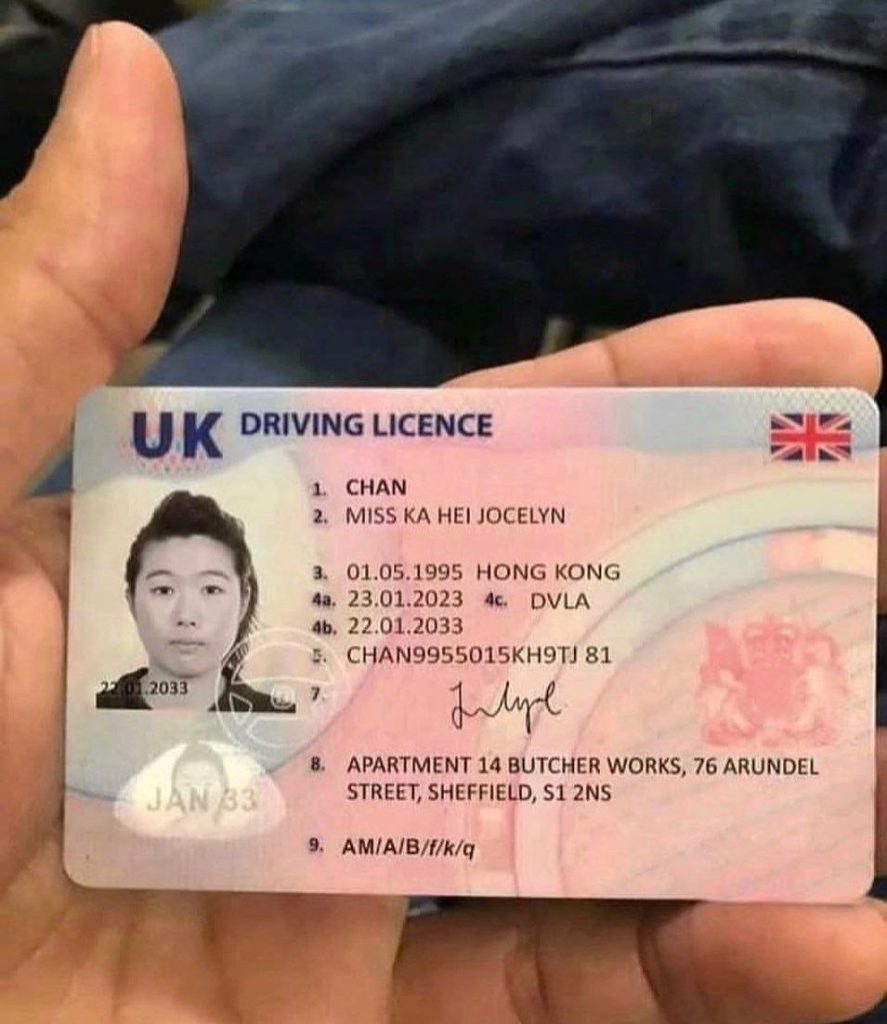
Once you’ve passed your theory and practical tests, you’ll be issued a full driving license. This license will display various categories, indicating which types of vehicles you’re legally allowed to drive. Understanding these categories is key to knowing your entitlements.
1. Cars (Category B)
This is the most common and sought-after license category, allowing you to drive most standard cars.
- Category B (Manual): Allows you to drive a manual or automatic car.
- Vehicle Description: Vehicles with a maximum authorised mass (MAM) of no more than 3,500kg.
- Passenger Capacity: Designed to carry no more than 8 passengers.
- Trailer: You can tow a trailer with a MAM of up to 750kg.
- Combined Weight: If the trailer is more than 750kg MAM, the combined MAM of the car and trailer must not exceed 3,500kg.
- Age: 17 years old (or 16 if on PIP mobility component).
- Category B (Automatic Only): If you pass your practical test in an automatic car, your license will be restricted to automatic vehicles only. To drive a manual car, you would need to pass a manual driving test.
2. Motorcycles and Mopeds (Categories AM, A1, A2, A)
The UK has a progressive access system for motorcycles, meaning you typically start with smaller bikes and gradually gain experience and entitlement to larger ones.
| Category | Description | Minimum Age | Engine Size / Power Limit | Test Required |
|---|---|---|---|---|
| AM | Mopeds | 16 | Two-wheelers up to 50cc, max 45 km/h | Compulsory Basic Training (CBT), Theory Test, Practical Test |
| A1 | Light Motorcycles | 17 | Motorcycles up to 125cc, max 11 kW (approx 15 bhp) | CBT, Theory Test, Module 1 & 2 Practical Tests |
| A2 | Medium Motorcycles | 19 | Motorcycles up to 35 kW (approx 47 bhp), power-to-weight ratio not exceeding 0.2 kW/kg. Can be restricted from a more powerful bike. | CBT, Theory Test, Module 1 & 2 Practical Tests |
| A | Unrestricted Motorcycles (Direct Access) | 24 (or 21 via Progressive Access) | Any motorcycle of any power output. | CBT, Theory Test, Module 1 & 2 Practical Tests |
Note: Progressive access allows you to upgrade to a higher category after holding a lower category for at least 2 years and passing the appropriate practical tests.
3. Lorries and Buses (Categories C1, C, D1, D)
These categories cover commercial vehicles and passenger transport. Obtaining these usually requires holding a Category B license first, passing further theory and practical tests, and often completing a Driver CPC (Certificate of Professional Competence).
| Category | Vehicle Type | Maximum Authorised Mass (MAM) | Age Requirement |
|---|---|---|---|
| C1 | Medium-sized lorries/vans | Over 3,500kg up to 7,500kg | 18 |
| C | Large lorries/Heavy Goods Vehicles (HGVs) | Over 3,500kg (no upper limit) | 21 (or 18 with Driver CPC) |
| D1 | Minibuses | Up to 16 passengers, max 8m long | 21 (or 18 with Driver CPC) |
| D | Buses/Coaches | Over 8 passenger seats (no upper limit) | 24 (or 21 with Driver CPC) |
Important: For professional driving of categories C1, C, D1, D, you will also need to obtain a Driver Certificate of Professional Competence (CPC), which involves initial qualification and ongoing periodic training.
4. Towing Trailers (Categories B+E, C1+E, C+E, D1+E, D+E)
Rules regarding towing trailers have changed recently. For those who passed their car test on or after 1 January 1997, you are now generally allowed to tow heavier trailers without taking an additional B+E test.
Current Rules for Car Drivers (Category B) and Trailers:
- If you passed your car test before 1 January 1997: You usually already have B+E (and often C1+E, D1+E depending on when you passed), allowing you to drive a vehicle and trailer combination up to 8,250kg MAM.
- If you passed your car test on or after 1 January 1997: The B+E category is now automatically added to your license. This means you can tow a trailer with a MAM of up to 3,500kg, provided the towing vehicle’s capabilities allow it.
- Combined MAM: The combined MAM of the towing vehicle and trailer must not exceed 7,000kg.
For larger vehicle categories towing trailers, separate entitlements are still required:
| Category | Vehicle Type | Maximum Combined MAM (Vehicle + Trailer) |
|---|---|---|
| C1+E | Medium-sized lorries with trailers | Over 3,500kg up to 12,000kg |
| C+E | Large lorries with trailers | No upper limit (Articulated/Road Trains) |
| D1+E | Minibuses with trailers | Up to 12,000kg |
| D+E | Buses with trailers | No upper limit |
Choosing the Right License for You
When deciding which license to pursue, consider your current and future needs:
- Daily Commute/Personal Use: A standard Category B car license will cover most personal driving requirements.
- Motorcycle Enthusiast: If you’re passionate about two wheels, plot your course through the AM, A1, A2, and A categories, considering the progressive access route.
- Caravan/Trailer Owner: Ensure your Category B entitlement covers the weight of your car and trailer combination. If you passed your test recently, you likely have the new B+E entitlement.
- Professional Driver (Lorries/Buses): If you aspire to a career in transport, focus on the C1, C, D1, or D categories, remembering the additional requirement of Driver CPC.
The Application Process for a Full License (Car Example)
Let’s illustrate the typical path for a Category B car license:
- Obtain a Provisional License: As detailed above.
- Undertake Driving Lessons: Learn with a qualified instructor.
- Pass the Theory Test: This involves two parts: multiple-choice questions and hazard perception clips. You must pass both parts to pass the test.
- Practice, Practice, Practice: Gain ample experience in various conditions.
- Pass the Practical Driving Test: This assesses your driving ability and knowledge of the Highway Code. It includes an eyesight test, vehicle safety questions, a general driving ability section, and independent driving.
- Receive Your Full License: Once you pass, your examiner will usually send your provisional license to the DVLA, and your full license will be posted to you within a few weeks.
Maintaining Your License
- Photo Card Renewal: Your photo card driving license must be renewed every 10 years. The DVLA will usually send you a reminder. Failing to renew your photo can result in a fine of up to £1,000.
- Medical Renewals: If you hold certain categories (e.g., C, D) or have specific medical conditions, your license may need to be renewed more frequently, often requiring medical checks.
- Changing Address/Name: You must inform the DVLA immediately if your address or name changes.
- Endorsements/Points: Driving offences can lead to points (endorsements) on your license, which can lead to disqualification if you accumulate too many.
Frequently Asked Questions (FAQ)
Q: Do I need an International Driving Permit (IDP) if I have a UK license? A: It depends on the country you’re visiting. For many countries in the EU, your UK license is sufficient. However, some countries outside the EU require an IDP in addition to your UK license. Always check the specific requirements for your destination country.
Q: How long does a provisional license last? A: A provisional license is valid for 10 years. However, the entitlement to drive (e.g., car or motorcycle) will expire after a certain period if you haven’t passed your test. For cars, it’s generally valid until you pass your test, or for a maximum of 10 years, whichever comes first.
Q: Can I drive an automatic car if I passed my test in a manual? A: Yes, if you passed your practical test in a manual car, your Category B license entitles you to drive both manual and automatic cars. If you passed in an automatic car, you are restricted to automatics only.
Q: What’s the difference between Category B and B+E? A: Category B allows you to drive a car and tow a trailer within certain weight limits, which now includes the ability to tow a trailer (up to 3,500kg MAM) if you passed your test on or after 1 January 1997. B+E specifically covered towing heavier trailer combinations before the rules changed, allowing a combined MAM of up to 7,000kg. As of late 2021, B+E is automatically added to new full Category B licenses.
Q: What happens if I don’t renew my photo card driving license? A: It is a criminal offence to drive with an expired license. While your driving entitlement may still be valid, you could face a fine of up to £1,000 if you don’t renew your photo card every 10 years.
Your Journey on the UK Roads
Choosing and understanding your UK driving license is the bedrock of safe and legal driving. Whether you’re just starting your journey with a provisional license or looking to expand your entitlements to larger vehicles, taking the time to understand the different categories and requirements will ensure you’re well-equipped for the road ahead. Drive safely!