
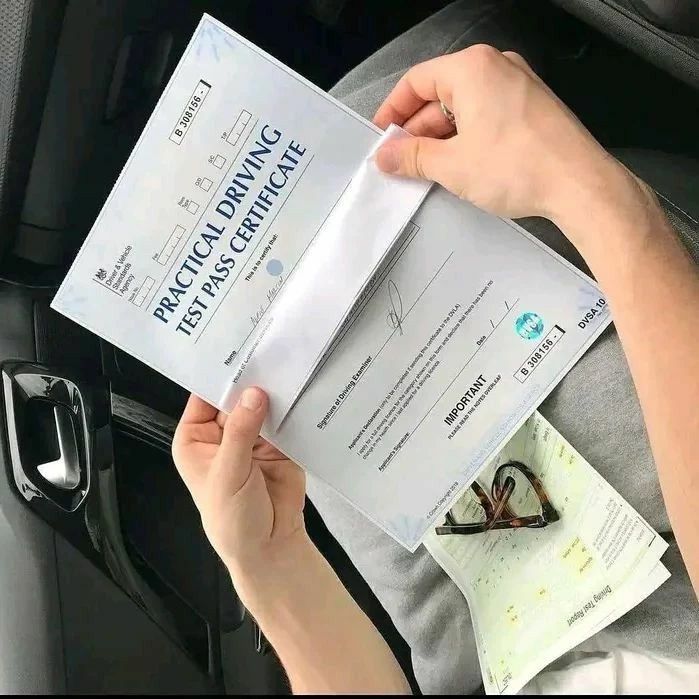
Your Gateway to Freedom: A Comprehensive Guide to Obtaining Your Driving License
The open road calls. The promise of independence, the convenience of personal transport, and the sheer thrill of a solo adventure are just some of the reasons why millions embark on the journey to obtain a driving license each year. But before you can hit the highway, there’s a process to navigate – one that requires preparation, patience, and a solid understanding of the rules.
This comprehensive guide is designed to walk you through every step of securing your driving license, from the initial learner’s permit to the moment you hold that coveted card in your hand. We’ll cover requirements, essential tips, and common pitfalls, ensuring you’re well-equipped for success.
Section 1: The Learner’s Permit – Your First Step on the Road
Think of the learner’s permit, sometimes called a provisional license, as your theory-based ticket to start practical driving. It signifies that you’ve understood the basic rules of the road and are ready to begin supervised driving practice.
What is it? A learner’s permit allows you to drive, but only under specific conditions. These typically include:
- Being accompanied by a fully licensed driver (often with a minimum number of years of experience).
- Displaying ‘L’ plates on your vehicle.
- Adhering to specific curfews or passenger restrictions (especially for younger drivers).
Requirements for Application: While specific requirements can vary slightly by region or country, you’ll generally need to meet the following criteria:
- Age: You must meet the minimum age requirement, which is usually between 16 and 18 years old, depending on your location and the type of vehicle.
- Proof of Identity: Official documents to confirm who you are.
- Proof of Residency: Documents proving where you live.
- Vision Test: A basic eye examination to ensure you meet minimum visual standards for driving.
- Written Knowledge Test: A multiple-choice exam testing your understanding of traffic laws, road signs, and safe driving practices.
To help you prepare, here’s a general list of documents you might need to bring to your local licensing office:
- Primary Identification: Birth certificate, valid passport, or state-issued ID card.
- Secondary Identification: Social Security card, bank statement, or utility bill.
- Proof of Residency: Utility bill, lease agreement, or bank statement (dated within the last 60 days).
- Proof of Age: Often covered by primary identification.
A Quick Look at Learner’s Permit Documents:
| Document Type | Examples | Purpose |
|---|---|---|
| Proof of Identity | Passport, Birth Certificate, Government-Issued ID | Confirm your legal name and identity |
| Proof of Residency | Utility Bill, Bank Statement, Lease Agreement | Verify your current address |
| Proof of Age | Birth Certificate, Passport | Ensure you meet the minimum age requirement |
| Social Security Number | Social Security Card | For official records (if applicable) |
| Application Form | Provided by the licensing authority | Official request for permit |
| Parental Consent | Signed form (if under 18) | Required for minors |
Preparing for the Written Test: Don’t underestimate this test! It covers a lot of ground. Your best resources are:
- Driver’s Handbook: The official manual from your local Department of Motor Vehicles (DMV) or equivalent. Read it thoroughly.
- Practice Tests: Many online resources offer free practice tests that simulate the real exam. Take as many as you can.
- Road Sign Recognition: Memorize all common road signs and their meanings.
Section 2: Mastering the Road – Driving Practice
Once you have your learner’s permit, the real fun (and learning) begins. This is where you transform theoretical knowledge into practical skills. The more supervised practice you get, the more confident and competent you’ll become.
- Professional Driving Lessons: While not always mandatory, enrolling in a certified driving school offers invaluable benefits. Instructors are trained to teach essential skills, identify bad habits, and prepare you specifically for the practical driving test. They also often have dual-control vehicles, adding an extra layer of safety.
- Supervised Driving with Family/Friends: Complement professional lessons with extensive practice alongside an experienced, licensed driver (usually a parent or guardian). This allows you to practice in various conditions, different times of day, and on routes you’ll likely encounter.
- Log Your Hours: Many jurisdictions require a minimum number of supervised driving hours (e.g., 50 hours, including 10 at night) before you can take the practical test. Keep a detailed log.
Key Skills to Master During Practice:
- Basic Vehicle Control: Steering, accelerating, braking smoothly.
- Mirror Usage: Constantly checking your rear and side mirrors.
- Signaling: Always signal your intentions clearly and in advance.
- Lane Changes: Safely merging and changing lanes.
- Turns: Executing left and right turns correctly, including yielding.
- Parking: Parallel parking, perpendicular parking, and reverse parking.
- Defensive Driving: Anticipating hazards, maintaining safe following distances, and being aware of your surroundings.
- Intersections: Knowing when to yield, stop, and proceed safely.
Section 3: The Practical Driving Test – Your Moment of Truth
This is it – the culmination of all your studying and practice. The practical driving test assesses your ability to safely and competently operate a vehicle in real-world conditions.
What to Expect:
- Examiner Briefing: The examiner will explain the test procedure and what they’ll be looking for.
- Pre-Drive Check: You’ll likely need to demonstrate your knowledge of the vehicle’s basic controls (e.g., turn signals, headlights, horn, wipers, handbrake).
- Road Test: You’ll drive a predetermined route, performing various maneuvers and demonstrating safe driving habits.
- Maneuvers: Expect to perform tasks like parallel parking, three-point turns, hill starts, and backing up in a straight line.
Tips for Success:
- Arrive Early: Give yourself ample time to relax and ensure your vehicle is ready.
- Vehicle Check: Ensure your vehicle is in good working order (lights, tires, brakes, insurance, registration are all valid).
- Be Confident, Not Complacent: Trust your training, but remain focused and alert.
- Exaggerate Your Checks: Make it obvious you’re checking mirrors and blind spots. Turn your head!
- Follow Directions: Listen carefully to the examiner’s instructions. If unsure, ask for clarification.
- Stay Calm: Nerves are normal, but take deep breaths and focus on the task at hand.
- Don’t Give Up: Even if you make a mistake, keep driving safely and professionally. You might still pass.
Common Reasons for Failing the Practical Test:
- Failure to stop completely at stop signs.
- Not checking mirrors or blind spots before changing lanes/turning.
- Incorrect lane positioning.
- Excessive speed or driving too slowly for conditions.
- Poor parking maneuvers.
- Failure to yield right-of-way.
- Hitting the curb.
Section 4: Congratulations! You’re Licensed! Now What?
You’ve passed! The feeling of accomplishment is immense. You’ll be issued your full driving license, perhaps a temporary one first, followed by the official card in the mail. But remember, this is just the beginning of your journey as a responsible driver.
Responsibilities of a New Driver:
- Adhere to all traffic laws.
- Never drive under the influence of alcohol or drugs.
- Avoid distracted driving (especially cell phone use).
- Ensure your vehicle is roadworthy and properly maintained.
- Always carry your license, registration, and insurance proof.
- Understand Graduated Licensing Systems (GLS): Many regions have a probationary period for new drivers, especially young ones. This might involve restrictions on night driving, the number of passengers you can carry, or a zero-tolerance policy for traffic violations. Familiarize yourself with these rules.
- Insurance: As a licensed driver, you must have valid auto insurance. Shop around for coverage that meets your needs and legal requirements.
Section 5: Renewals and International Driving Permits (IDP)
A driving license isn’t a “set it and forget it” item. It has an expiry date, and you might need special documentation for international travel.
- License Renewal: Your license will have an expiration date, typically every 4-10 years. It’s crucial to renew it on time to avoid fines or having to re-take tests. You’ll usually receive a reminder, and the process often involves an online application, a new photo, and sometimes a vision test.
- International Driving Permit (IDP): If you plan to drive in a foreign country, your domestic license might not be sufficient. An IDP is a legal document that translates your national driving license into multiple languages, making it understandable to authorities abroad.
- When you need one: Most countries outside of North America and Western Europe require an IDP in conjunction with your domestic license. Always check the specific requirements of your destination country.
- How to get one: You can typically obtain an IDP from your national automobile association (e.g., AAA in the USA, CAA in Canada, AA in the UK) for a small fee. It’s usually valid for one year.
Key Differences: Learner’s Permit vs. Full License
| Feature | Learner’s Permit | Full Driving License |
|---|---|---|
| Supervision | ALWAYS requires a fully licensed driver in the vehicle | No supervision required |
| Restrictions | ‘L’ plates, passenger limits, night driving curfews | Fewer to no restrictions (may have probationary limits for new drivers) |
| Driving Solo | Not permitted | Permitted |
| Eligibility | Minimum age (e.g., 16-17), written test passed | Passed practical driving test, met permit duration requirements |
| Validity | Temporary (e.g., 1-2 years) | Longer term (e.g., 4-10 years), renewable |
Frequently Asked Questions (FAQ)
Q1: How long does it typically take to get a driving license? A1: The timeline varies significantly. It depends on your country’s graduated licensing system (if any), how quickly you pass your written test, the waiting period between your permit and practical test, and how much supervised practice you accumulate. It can range from a few months to over a year.
Q2: What if I fail the practical driving test? A2: Don’t worry, it’s common! Most jurisdictions allow you to re-take the test after a waiting period (e.g., a week or two) and often requires another fee. Use the feedback from your examiner to practice specific areas before your next attempt.
Q3: Can I drive in another country with my domestic driving license? A3: It depends on the country. For many, especially within the same geographical region or with reciprocal agreements, your domestic license is sufficient for short visits. However, for many other countries, you will need an International Driving Permit (IDP) in addition to your domestic license. Always check the specific requirements of your destination before you travel.
Q4: Are there different classes of driving licenses? A4: Yes, absolutely. Most countries have different classes (e.g., Class A, B, C, D, M) that correspond to different types of vehicles. For instance, a standard passenger car license is usually one class, while licenses for motorcycles, commercial trucks, or buses are separate and require different tests.
Q5: What’s the best way to prepare for the written knowledge test? A5: The single best resource is your official driver’s handbook from your local licensing authority. Read it thoroughly, highlight key information, and then take as many online practice tests as possible. These tests often simulate the real exam format and help you identify areas where you need more study.
Conclusion
Obtaining your driving license is more than just passing a few tests; it’s about embracing a significant responsibility. The journey from a novice learner to a confident, licensed driver is one filled with learning, practice, and ultimately, a newfound sense of freedom. By understanding the process, preparing diligently, and committing to safe driving practices, you’ll not only secure your license but also become a responsible and skilled member of the motoring community. Drive safely, and enjoy the open road!