
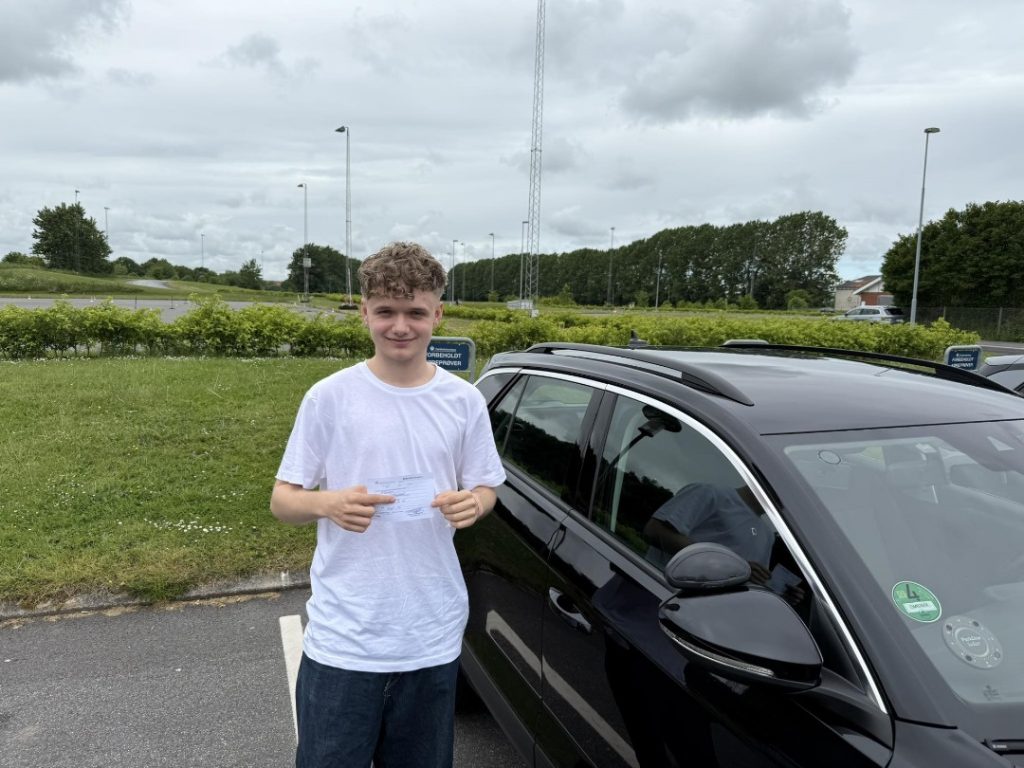
Your Passport to the Road: Everything You Need to Know About the UK Provisional Driving Licence
The open road, the freedom to travel, the convenience of independent transport – these are dreams for many, and your journey towards achieving them in the UK begins with a single, crucial document: the Provisional Driving Licence. This isn’t just a piece of plastic; it’s your official permission to start learning, to gain the skills and experience necessary to become a safe and confident driver.
If you’re contemplating taking the plunge into the world of driving, understanding the ins and outs of the provisional licence is your essential first step. This comprehensive guide will walk you through everything you need to know, from eligibility and application to the rules you must follow, ensuring you’re well-equipped for the exciting road ahead.
What Exactly is a Provisional Driving Licence?
In the simplest terms, a provisional driving licence is a document issued by the Driver and Vehicle Licensing Agency (DVLA) that allows you to learn to drive a car or ride a motorcycle on public roads in the UK, provided you adhere to specific conditions. It signifies that while you are not yet a fully qualified driver, you have met the initial requirements to begin your practical training under supervision.
Are You Eligible? Provisional Licence Requirements
Before you even think about filling out an application, you need to ensure you meet the basic eligibility criteria set by the DVLA. These requirements are in place to ensure that all provisional licence holders are of a suitable age and have the fundamental abilities needed to learn safely.
Table 1: Provisional Driving Licence Eligibility Criteria
| Criteria | Details |
|---|---|
| Age Requirement | For Cars: You must be at least 15 years and 9 months old to APPLY. However, you can only start driving a car on public roads when you turn 17. (Exceptions apply if you receive the enhanced rate of the mobility component of Personal Independence Payment (PIP), where you can drive at 16). |
| For Mopeds or Light Quad Bikes: You must be at least 16 years old to apply and start riding (after completing Compulsory Basic Training – CBT). | |
| Residency | You must be a resident of Great Britain (England, Scotland, Wales) or Northern Ireland for at least 185 days in the last 12 months. |
| Eyesight | You must be able to read a modern car number plate from a distance of 20 metres (or 20.5 metres for old style number plates) with or without corrective lenses (glasses or contact lenses). You must also meet the minimum eyesight standard for driving. |
| Medical Fitness | You must meet the required medical standards for driving. You’ll be asked to declare any medical conditions that might affect your driving ability. |
| Identity | You must be able to prove your identity. |
How to Apply for Your Provisional Driving Licence
Once you’ve confirmed your eligibility, the next step is to apply. You have two main methods for submitting your application: online or by post. Both are straightforward, but each has its own advantages.
1. Applying Online (Recommended)
This is generally the quickest and most convenient way to get your provisional licence.
- Where to apply: Visit the official GOV.UK website. Be wary of unofficial websites that may charge extra fees.
- What you’ll need:
- A valid UK passport number. If you don’t have a passport, you’ll need to apply by post.
- Your National Insurance number (if you have one).
- Addresses where you’ve lived for the last 3 years.
- Photo: Your digital passport photo will usually be used directly from the passport office. If not, the DVLA will provide instructions on how to submit one.
- Cost: The online application fee is typically lower than the postal application.
- Processing Time: Online applications are usually processed faster, often within a few days to a couple of weeks.
2. Applying by Post
If you don’t have a valid UK passport, or simply prefer a paper application, you can apply by post.
- How to get the form: You’ll need a D1 application form, which you can get from most Post Offices or order online from the GOV.UK website to be sent to you.
- What you’ll need:
- The completed D1 application form.
- Original documents to prove your identity (e.g., birth certificate, valid non-UK passport, travel document) and residency. Do not send photocopies as they will not be accepted.
- A recent passport-style colour photograph that meets DVLA requirements.
- The application fee (typically slightly higher than the online fee).
- Where to send it: The D1 form will instruct you on where to send your application and original documents. The DVLA returns original documents separately, often after your licence has been issued.
- Processing Time: Postal applications can take longer to process, sometimes up to 3-4 weeks, especially during busy periods.
Cost and Processing Time: A Quick Look
As of my last update, the fee for a provisional driving licence is typically £34 when applying online and £43 when applying by post. These fees can change, so always check the latest information on the GOV.UK website.
Processing times vary but generally, you can expect to receive your provisional licence within 1-3 weeks for online applications and 3-4 weeks for postal applications. It’s always a good idea to apply well in advance of when you plan to start driving lessons.
What You Can Do (and What You Can’t!) with a Provisional Licence
Once your provisional licence arrives, it’s like holding the key to a new world. However, this key comes with a set of very important rules. Failing to follow these rules can result in fines, points on your licence, or even disqualification, so pay close attention!
What You CAN Do:
- Start Driving Lessons: You can begin taking lessons with a qualified driving instructor (an Approved Driving Instructor or ADI).
- Practice with a Supervisor: You can practice driving in a car with a friend or family member, provided they meet the following criteria:
- They must be at least 21 years old.
- They must have held a full, valid driving licence for at least 3 years (for the type of vehicle you are driving – e.g., manual licence for a manual car).
- They must be fit to drive and not under the influence of alcohol or drugs.
- Drive on Motorways (with an ADI): Since 2018, you can drive on motorways if you are with an approved driving instructor in a car fitted with dual controls. This is not compulsory, but highly recommended for gaining motorway experience safely.
- Ride a Moped/Light Quad Bike (with CBT): If you’re 16 or over, you can ride a moped or light quad bike (up to 50cc) on the road after completing your Compulsory Basic Training (CBT) course. You must display L-plates.
- Ride a Motorcycle up to 125cc (with CBT): If you’re 17 or over, you can ride a motorcycle up to 125cc on the road after completing your CBT. You must display L-plates.
The Golden Rules – What You MUST Do:
- Display L-Plates: You must display ‘L’ plates (or ‘D’ plates in Wales) clearly on the front and rear of any vehicle you drive or ride. These must be correctly sized and visible.
- Be Insured: The vehicle you are driving must be insured for you to drive it. This can be through your instructor’s insurance, being added to a family member’s policy, or taking out a specific learner driver insurance policy.
- Be Supervised: If driving a car, you must always be supervised by someone who meets the criteria mentioned above (21+, 3+ years full licence).
What You CAN’T Do:
- Drive Unaccompanied: You cannot drive a car or ride a motorcycle on public roads without the appropriate supervision (unless it’s a moped/125cc bike after CBT, but still with L-plates).
- Carry Passengers (Unsupervised): When learning to drive a car, you cannot carry any passengers other than your supervisor and/or your driving instructor.
- Drive on Motorways Unsupervised: You cannot drive on motorways unless you are with an ADI in a dual-controlled car.
- Use a Mobile Phone: Like all drivers, it is illegal for you to use a hand-held mobile phone while driving, even if you are stopped in traffic.
- Exceed Moped/Motorcycle Restrictions: If you’re riding a moped or motorcycle with a provisional licence, you must adhere to engine size and power restrictions and cannot carry a pillion passenger.
Maintaining Your Provisional Licence
Your provisional licence is a valuable document, and there are a few things you need to do to keep it valid and up-to-date:
- Update Your Address: If you move house, you must inform the DVLA of your new address. Failure to do so can result in a fine of up to £1,000.
- Report Medical Conditions: If you develop a medical condition that could affect your driving, you must inform the DVLA immediately.
- Renew Your Photocard: The photocard part of your provisional licence needs to be renewed every 10 years, just like a full licence, even if you haven’t yet passed your driving test.
From Provisional to Full: The Journey Ahead
Your provisional licence is just the beginning. The ultimate goal is to pass your driving tests and earn your full, unrestricted licence. This involves two key stages:
- The Theory Test: You must pass the theory test before you can book your practical driving test. This consists of multiple-choice questions and a hazard perception test.
- The Practical Driving Test: Once you’ve honed your skills and passed your theory test, you can take your practical driving test. Pass this, and your provisional licence will be automatically converted into a full driving licence.
Table 2: Provisional vs. Full Driving Licence (Key Differences)
| Feature | Provisional Driving Licence | Full Driving Licence |
|---|---|---|
| Supervision | Required when driving a car (21+, 3+ years full licence held). Not required for mopeds/125cc after CBT. | Not required (you can drive unaccompanied). |
| L-Plates | Required to be displayed on the front and rear of the vehicle when learning to drive. | Not required. |
| Passengers | Restricted to supervisor/instructor only when learning to drive a car. No pillion passenger on provisional motorcycle. | No restrictions on car passengers. Can carry pillion passenger on motorcycle (if licence allows). |
| Motorways | Allowed only with an Approved Driving Instructor (ADI) in a dual-controlled car. | Allowed to drive freely on motorways. |
| Insurance | Specific learner driver insurance or being named on supervisor’s policy is essential. | Standard car insurance required (your own policy or named on someone else’s). |
| Driving Abroad | Not valid for driving outside the UK. | Generally valid for driving in most foreign countries (may require an International Driving Permit for some). |
| P (Probationary) Plates | Not applicable before passing the test. | Optional P-plates (green) can be displayed for the first two years after passing your test. |
Frequently Asked Questions (FAQ)
Q1: Can I use my provisional licence as a form of ID? A1: Yes, a UK provisional driving licence is widely accepted as a valid form of photographic identification for various purposes, such as opening a bank account, proving your age (e.g., in shops or pubs), and for domestic travel.
Q2: Do I need insurance to drive with a provisional licence? A2: Absolutely, yes. It is a legal requirement that any vehicle you drive on public roads must be insured for you as a provisional licence holder. This can be through your driving instructor’s insurance, being specifically named on a family member’s policy, or by taking out a dedicated learner driver insurance policy. Driving without insurance is illegal and carries severe penalties.
Q3: How long is a provisional driving licence valid for? A3: The photocard part of your provisional licence is valid for 10 years and needs to be renewed. Your entitlement to learn to drive remains active until you either exchange it for a full licence or it is revoked.
Q4: Can I buy a car with a provisional driving licence? A4: Yes, you can legally buy and register a car in your name even if you only have a provisional licence. However, you cannot legally drive it on public roads until it is taxed, insured for you, and you meet all the conditions for provisional drivers (L-plates, supervision, etc.).
Q5: What happens if I get points on my provisional licence? A5: Any penalty points you receive on your provisional licence will stay on your driving record. If you accumulate 6 or more penalty points within the first two years of passing your full driving test, your full licence will be revoked, and you’ll have to retake both your theory and practical tests.
Q6: Can I drive on my provisional licence abroad? A6: No, a UK provisional driving licence is only valid for learning to drive in Great Britain and Northern Ireland. It is not recognised as a valid licence for driving in other countries. You must have a full driving licence to drive abroad.
Conclusion
The provisional driving licence is more than just a document; it’s the commencement of an exciting and empowering journey. By understanding the eligibility criteria, application process, and crucially, the rules and regulations that govern its use, you’ll be setting yourself up for success. Drive safely, learn diligently, and before you know it, that provisional licence will be proudly exchanged for your full one, granting you the full freedom of the open road. Good luck!